A robotics lab can publish a strong demo and still be years from a machine that works outside the lab. Without a source list or evidence pack, the useful question is not which labs deserve a place on a ranking, but which signs show that a lab’s work may matter in practice.
- A working robot matters more than a polished video.
- Public tests should name the task, setting, and result.
- A lab’s path from paper to field trial tells you what comes next.
Start with the machine, not the headline
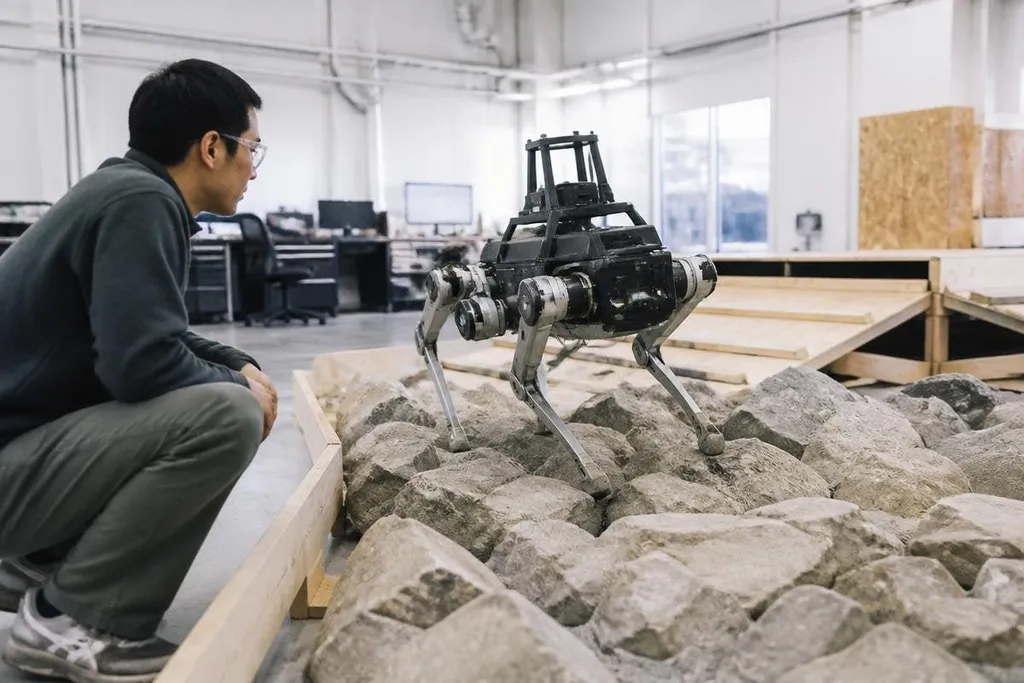
A lab earns attention when its robot handles a task with clear limits. That task might involve walking over loose ground, moving an object with an arm, or using vision to find a part. The proof needs enough detail for another team to check what happened.
A short video can show motion, but it can hide the work around it. Look for the length of the run, the number of failed attempts, the floor type, the load, and any human control. Teleoperation means a person sends commands to the robot. If a person guides each movement, the demo says less about autonomous control.
The same test also needs a fair comparison. A walking robot moving at 1 m/s on a flat floor tells you little about its work on gravel. An arm lifting 2 kg may fit a lab task but fail at a warehouse station that needs 10 kg. The task sets the meaning of the number.
Check the research trail
A lab’s published work should connect its claim to a method. For a vision system, that may include the camera setup, lighting, objects, and error rate. For a legged robot, it may include speed, terrain, battery use, and how the team measured recovery after a slip.
A paper can still matter when the robot is not ready for sale. It may present a control method, a sensor setup, or a test that other labs can repeat. The useful detail is the boundary: what the team tested, what it did not test, and which parts remain in simulation.
A lab result belongs beside its test setting. A shipped robot needs deployment evidence. Robot24.com robotics coverage can place a paper’s method, date, and test setting beside the claim, so you can see what reached hardware and what stayed in simulation. That distinction sets up the next check: work outside the lab.
Look for work outside the lab
A field trial adds a different kind of proof. The robot has to run near people, cope with changing objects, and recover when the planned path fails. Those conditions expose costs that a controlled demo can leave out.
For an industry reader, the useful questions are practical. Who operates the robot? How long does setup take? What happens when a sensor fails?
Does the lab report downtime, maintenance, power use, or human help? A system that needs an engineer beside it for each run may still teach the team a lot, but it has a different path to a paid deployment.
Partnerships can add evidence, but a partner’s name does not prove that the robot works. Ask what the partner allowed the lab to test, where the test happened, and whether the result included normal work rather than a staged task.
A practical check before you trust a lab’s claim
Use this list when you compare labs or read a new robotics paper:
- Name the task: Record the exact job, object, terrain, and load.
- Check human input: Mark every point where a person guides, resets, or selects the next action.
- Find the measure: Look for speed, error rate, runtime, payload, or repeat count.
- Separate sim from hardware: Note which results came from software and which came from a physical robot.
- Find the outside test: Give extra weight to work run at a customer site or an independent test site.
- Write down the gap: State the condition the lab has not shown yet.
I'd rank a lab with a repeatable test and a clear limit above one with a smoother video and fewer details. That choice protects your time because a missing measurement often becomes a deployment cost later.
A useful watch list should name specific labs only after its sources are checked. The next step is to gather dated papers, test videos, field reports, and funding or partner records, then compare each lab against the same task and measure.